Formal Belts for Men

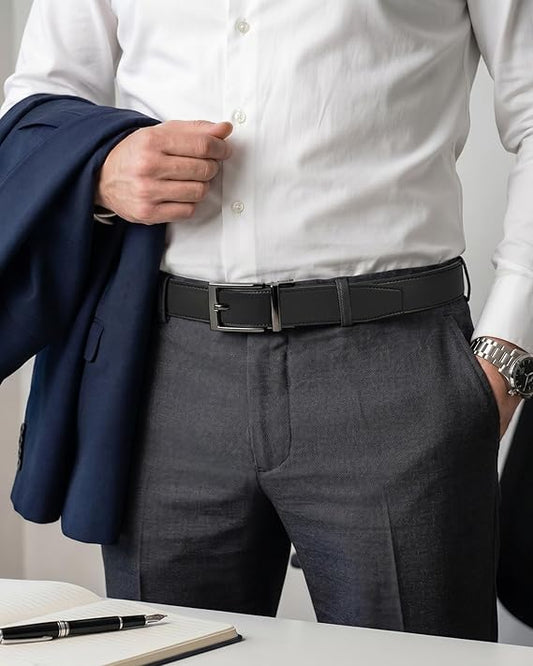
There's a kind of detail in a well-put-together outfit that nobody consciously notices - and that's exactly the point. A formal belt works best when it disappears. It holds the line between jacket and trouser, anchors the silhouette, and tells anyone paying attention that the person wearing it thought it through. When it's wrong - too wide, too casual, wrong color - something about the whole outfit feels slightly off, even if no one can name why.

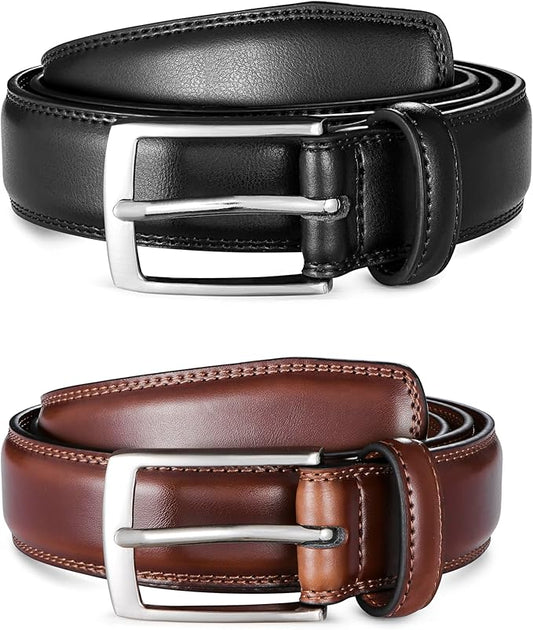
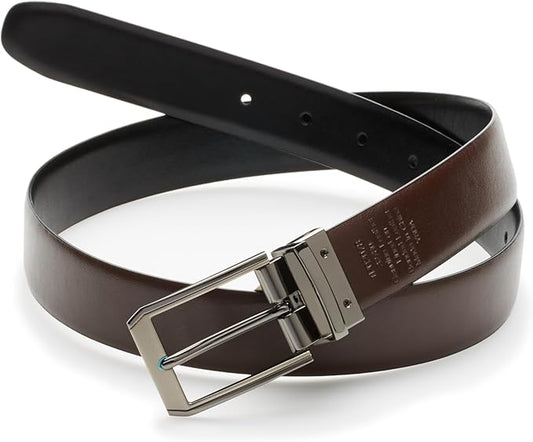
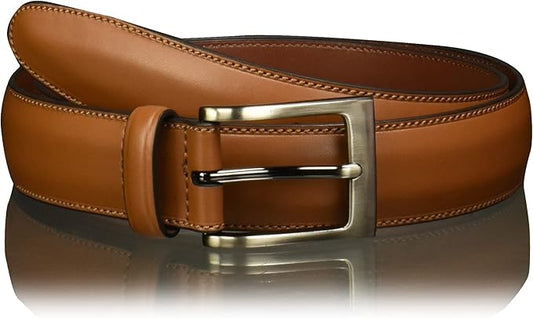
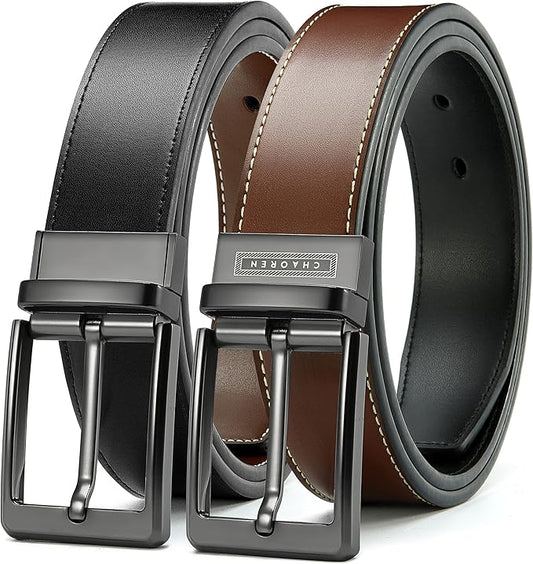
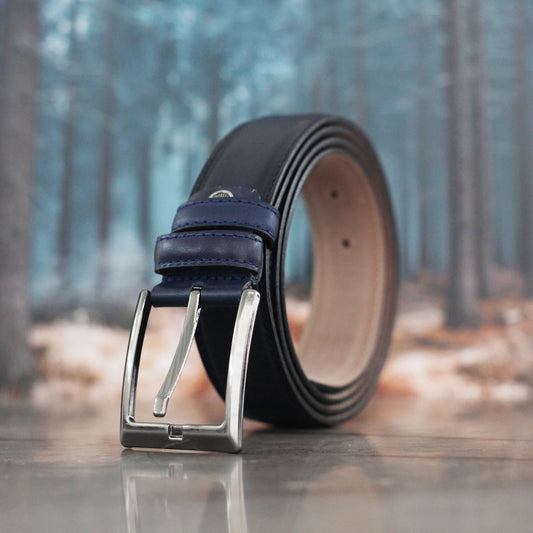
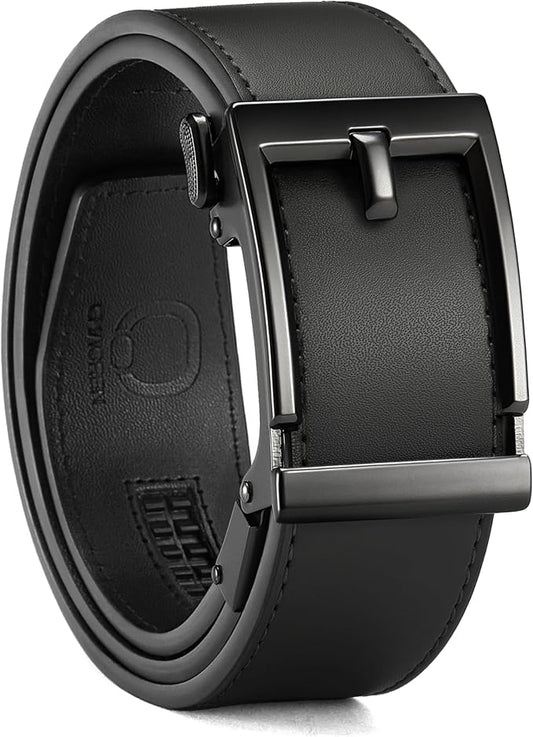
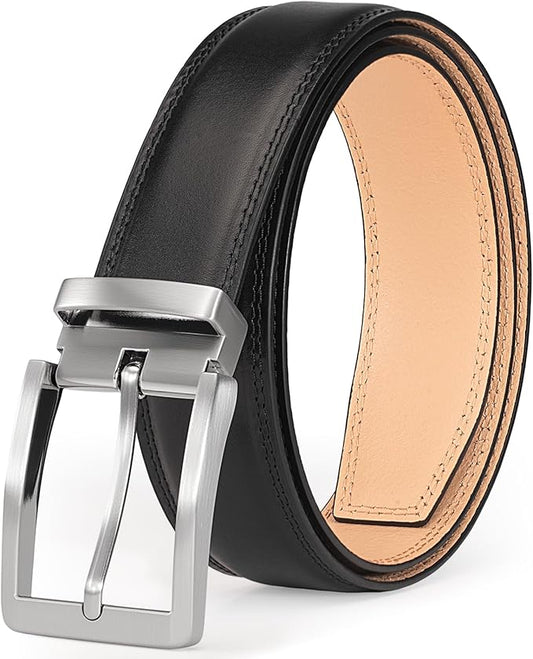
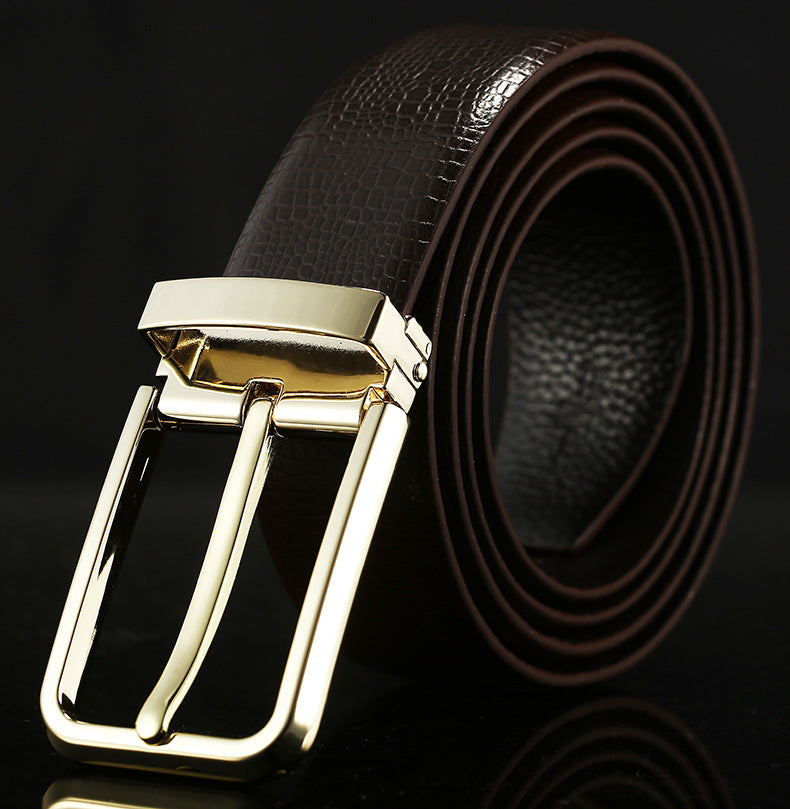
This collection is built around belts that get that part right. Full-grain leather, cut from the outermost layer of the hide, with a surface that doesn't crack at the fold after a year of regular wear. Widths kept between one and one-and-a-quarter inches - the standard that sits clean through dress pant loops without bulk. Single-prong buckles with a polished finish that lie flat under a jacket hem and don't compete with your watch or cufflinks.

These aren't belts you replace every season. A properly made full-grain leather dress belt worn regularly through a working wardrobe - suit Mondays, client meetings, the occasional wedding - should still be in rotation five to ten years from now. That's not a claim, it's just how the material behaves when the hide hasn't been sanded down and re-coated to hide its flaws.

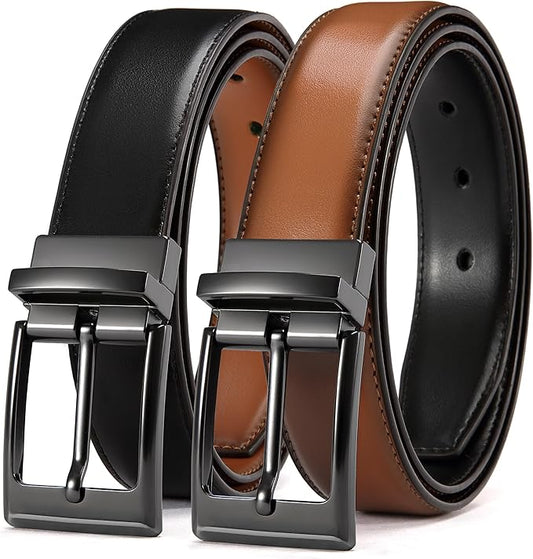
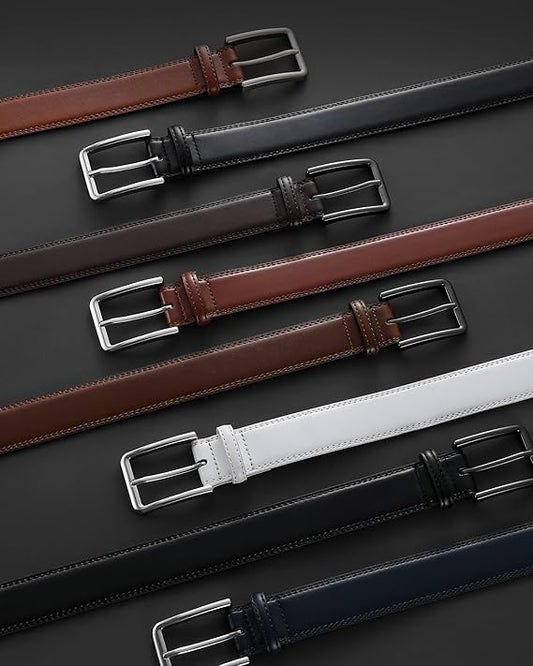
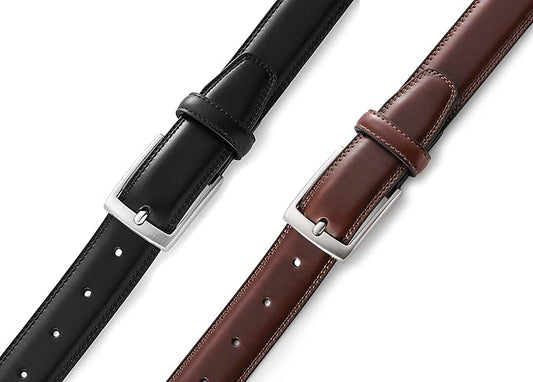
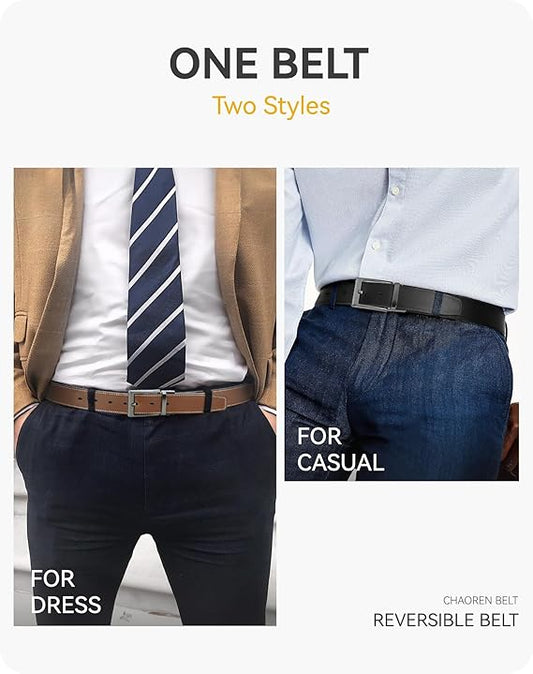
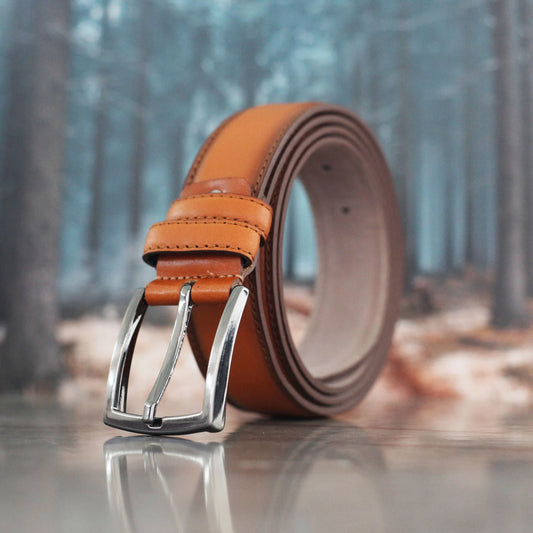
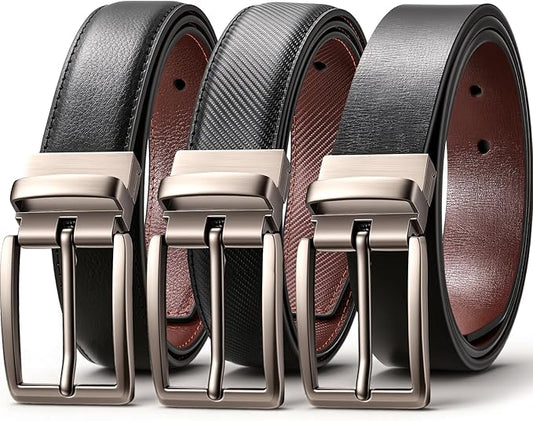
Black and brown are both here, in depths that read well under office lighting and formal event settings alike. If you're building a wardrobe that covers most occasions - work, weddings, interviews, dinners - both colors earn their place. Most men who wear suits regularly end up needing both eventually. Might as well start there.

What Actually Makes a Belt Formal

The gap between a belt that works with a suit and one that doesn't comes down to four things. Width, surface texture, buckle profile, and color.

Width is the most overlooked. Casual belts run wide - one-and-a-half inches or more - which is proportioned for jeans. That same width on dress trousers looks heavy and out of place. Formal belts for men sit at one inch to one-and-a-quarter inches, the range that threads cleanly through dress loops and keeps the waistline reading as a line, not a feature.

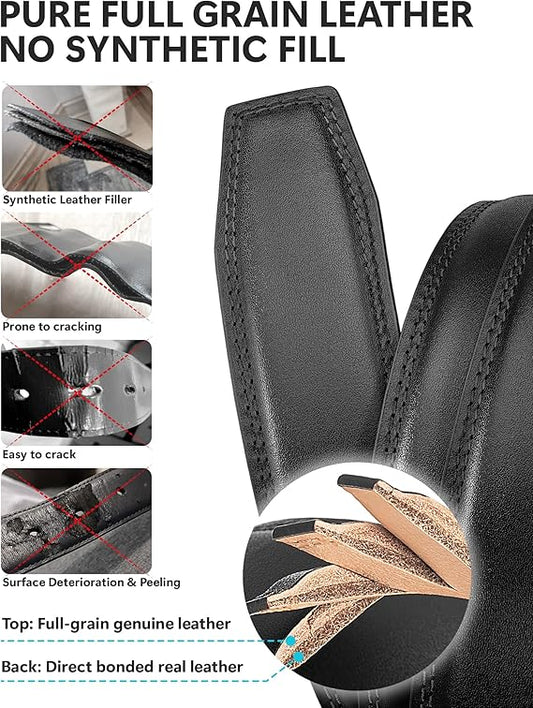
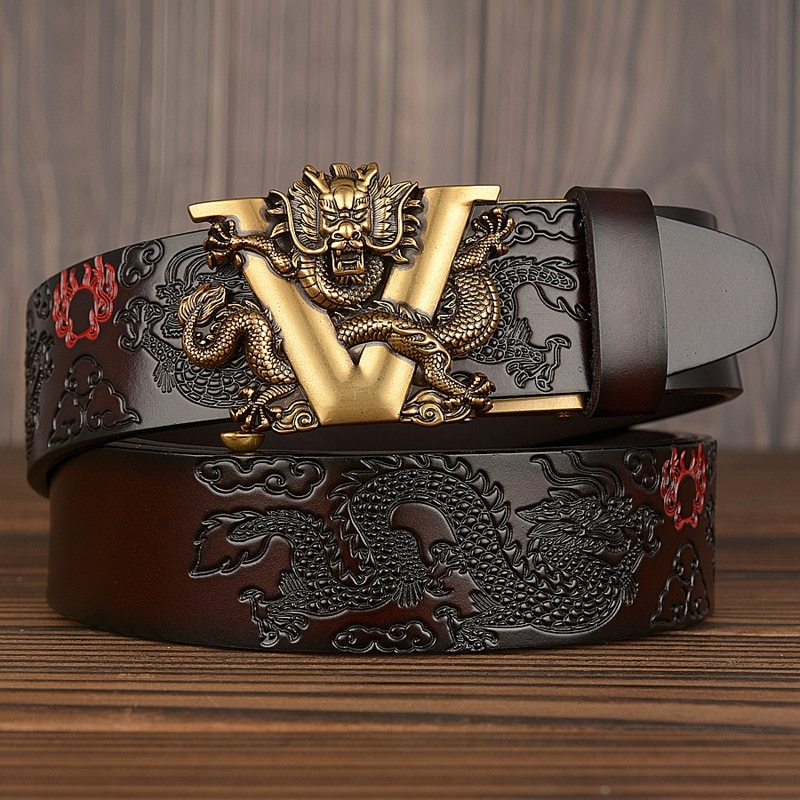
Surface texture separates dress leather from everything else. Smooth, tight-grained leather is the baseline for formal wear. Not embossed, not woven, not distressed. Full-grain leather - the top layer of the hide, with its natural fiber structure intact - develops a patina over time rather than peeling apart at the bend. Try this: bend your current belt at the third hole and look closely at the surface. If the finish is cracking or the inner layer is starting to show, you're looking at what happens when the material underneath is compressed scrap rather than solid hide. Full-grain doesn't do that.

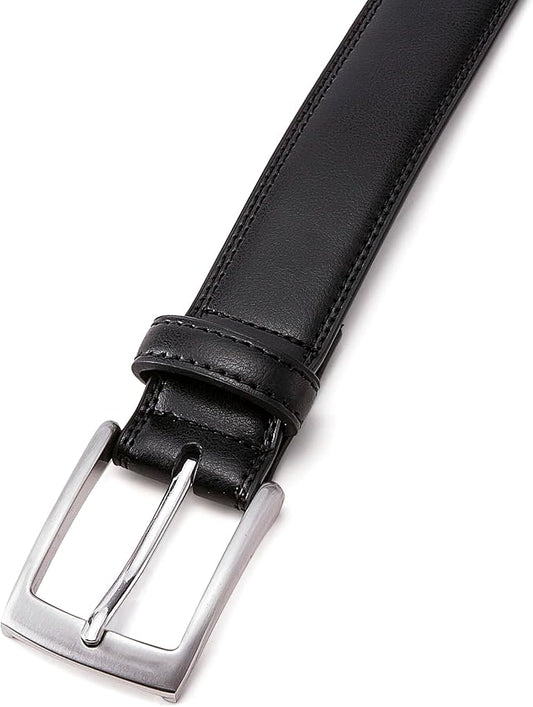
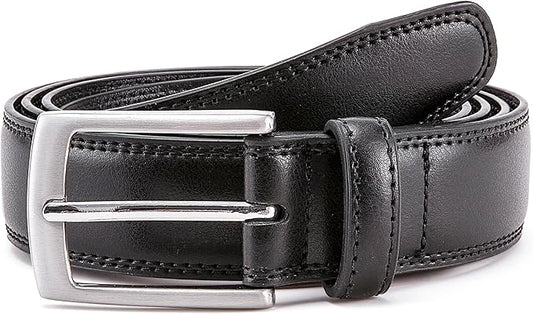
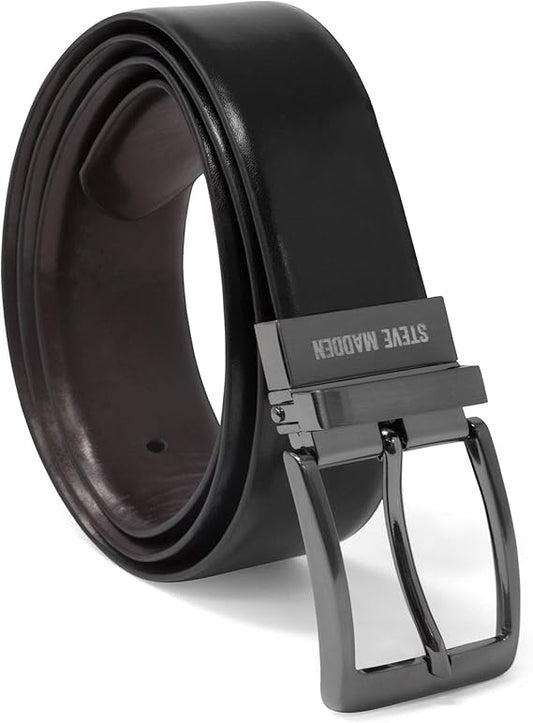
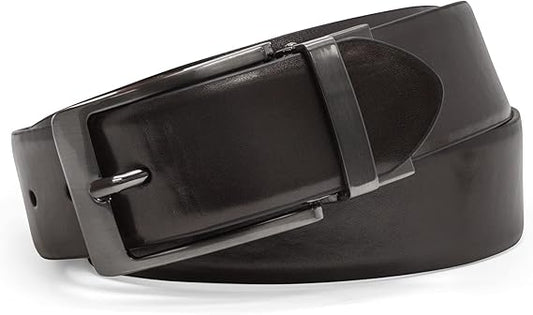
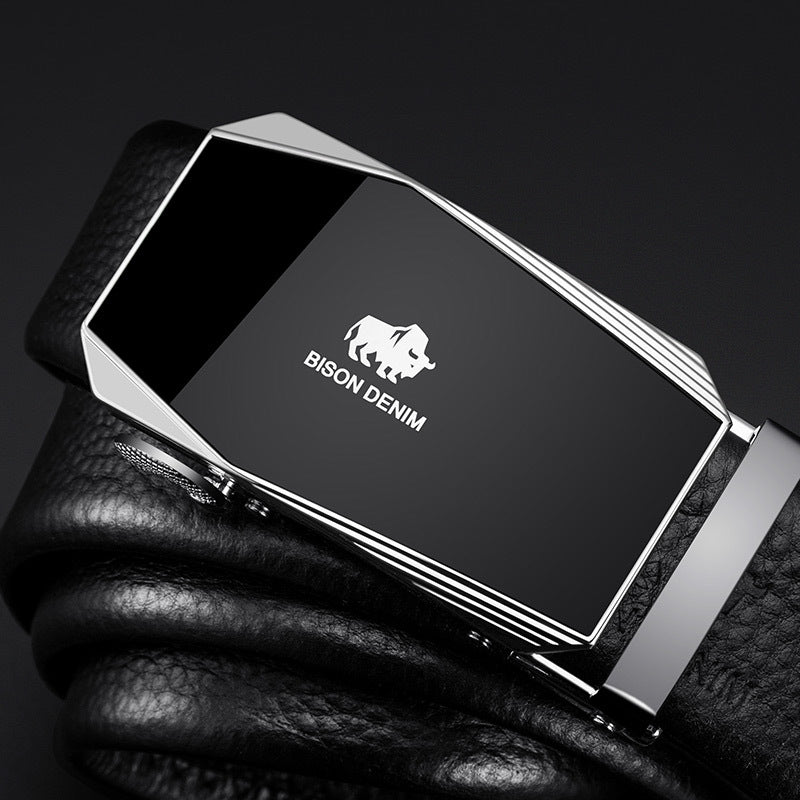
Buckle profile matters most when you're sitting down - which is most of the workday. A single-prong buckle with a minimal frame lies flat. No ridge under a jacket, no bulk. For most formal settings, brushed or polished silver is the standard. Wearing a silver-toned watch or silver cufflinks? A matching buckle finish ties the metal accents across your outfit into something that reads deliberate rather than coincidental.

Color has more depth in full-grain leather than in treated alternatives. A good black dress belt carries a richness that's noticeably different from the slightly flat, painted look you get from lower-grade leather. Same goes for cognac and dark brown tones.

Black or Brown - The Practical Answer

Black formal belts are the baseline. Black suit, black shoes, black belt - no deliberation needed. They also work across navy and charcoal without conflict.

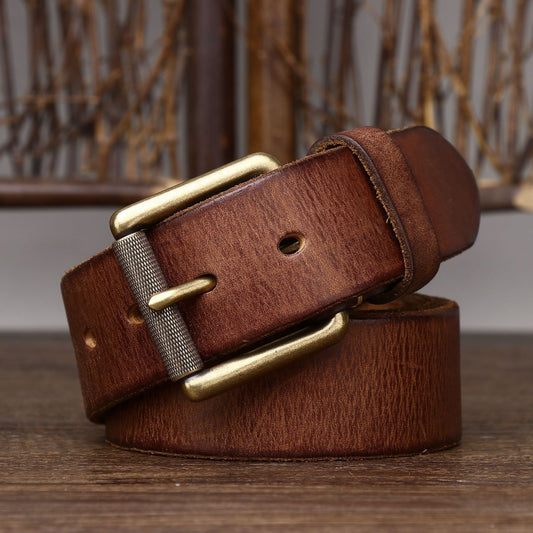
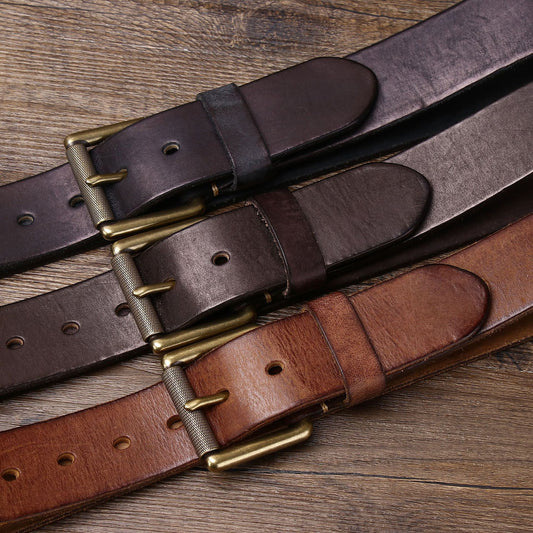
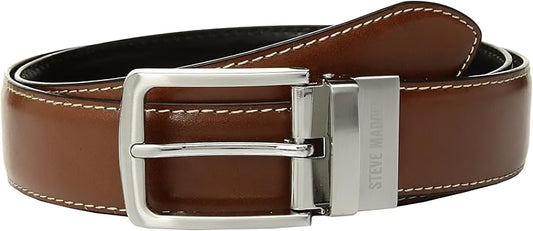
Brown dress belts operate in a warmer register. Deep cognac, dark tan, medium brown - all pair naturally with brown footwear and earth-tone suits, whether that's olive, khaki, or lighter grey. The rule that holds in most formal contexts: match the belt to the shoes in both color and finish. Brown belt with black shoes is a mismatch that reads as an oversight rather than a style choice, and the same goes in reverse.

Getting the Size Right

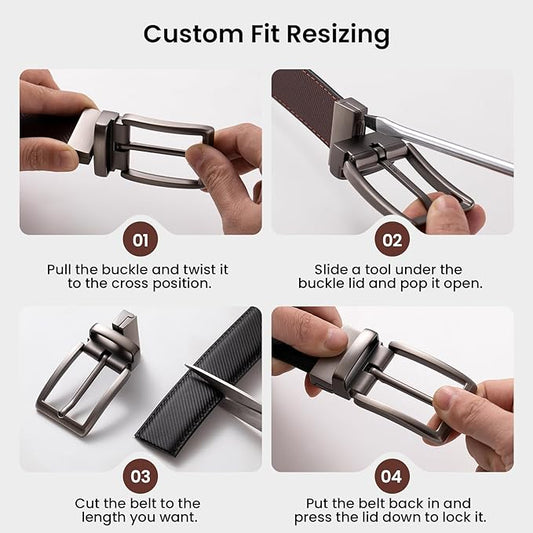
Add two inches to your trouser waist size. That's it. A 34-inch waist fits a 36-inch belt. A 32-inch waist fits a 34-inch belt. This accounts for how loops sit on the waistband and where the buckle tongue falls - ideally at the center hole, which is the mark of a properly sized belt. Most belts here have five evenly spaced holes, so there's flex on either side, but the waist-plus-two formula puts you in the right place to start.

How These Are Made

Reinforced stitching along the edge isn't decorative. It's what stops the belt from splitting at the seam line where stress accumulates - right at the fold. Hand-finished edges seal the leather against moisture and abrasion. A buckle that doesn't rattle or feel hollow when you handle it signals the same thing the leather does: the weight is real and the construction isn't hiding anything.

A leather dress belt built this way doesn't need replacing when the season changes. It needs occasional conditioning and that's genuinely about it. Over a decade of regular use, the cost per wear on a well-made full-grain belt is lower than cycling through cheaper alternatives every year or two. That math is worth thinking about when you're deciding what to spend.
What Our Customers Say

★★★★★
Bought the black full-grain for a friend's wedding last spring. Wore it again to a client dinner two weeks later. It's become the belt I reach for almost automatically now. The buckle doesn't shift and the leather feels substantial - not stiff, just solid. Worth every dollar.
Marcus T. Chicago, Illinois
★★★★★
I've gone through a few dress belts over the years that looked fine in the store and started cracking within six months. This one's held up after nearly a year of regular office use. The finish still looks the same as when I bought it. Simple as that.
Daniel R. London, United Kingdom
★★★★★
Needed something for a black tie event and wasn't sure about sizing. Used the pants-size-plus-two method and it fit perfectly on the middle hole. The leather's a proper deep black - not that slightly purple-black you see on cheaper ones. First time I've actually been happy with an online belt purchase.
James O. Austin, Texas
★★★★★
Ordered the brown dress belt to pair with my tan suit for a wedding. The color matched my shoes closer than I expected ordering online. Stitching along the edges is clean and flush. Nothing feels cheap about it.
Tariq H. Dubai, UAE
★★★★★
My previous belt lasted maybe two years before the inner layer started separating at the fold. This one's a completely different construction - you can tell just by the weight. I wear it three or four days a week to the office and there's no wear showing at the bend point at all.
Ryan M. New York, New York
★★★★★
Got it before a job interview as part of a suit refresh. The single-prong buckle sits completely flat under my jacket, which sounds minor but my old belt never quite managed it. Ended up going back for the brown version a month later.
Chris B. Melbourne, Australia

Frequently Asked Questions

What width should a formal belt be for dress pants or a suit?
One inch to one-and-a-quarter inches. Dress trouser loops are narrower than jeans loops, and anything wider than one-and-a-quarter inches won't sit properly - it'll bunch at the buckle or force the loop open. Stay within that range for anything you're wearing with a suit or formal trousers and you won't have a problem.
How do I find my correct belt size?
Take your trouser waist size and add two inches. A 34-inch waist takes a 36-inch belt. The formula accounts for where the loops sit on your waistband and lands the buckle tongue at the center hole, which is the sign of a properly fitting belt. Most belts here have five holes with even spacing, so there's adjustment room on either side - but waist-plus-two is where you start.
Does a formal belt need to match my shoes?
Yes, in color family and finish. Black shoes go with a black dress belt, brown shoes with a brown or cognac belt. The finish should read from the same register too - a very matte belt looks slightly off against high-gloss dress shoes. You're not chasing an exact match, just making sure the two belong in the same palette. If your watch or cufflinks are silver, a silver-finish buckle pulls the metal tones across the outfit in a way that feels intentional rather than accidental.
Can I wear a brown belt with a black suit?
Not for traditional formal or business settings. The color contrast draws attention to the combination in a way that works against the suit. Brown belts belong with navy, grey, olive, tan, or earth-toned suits, paired with brown footwear. It's not an arbitrary rule - formal dressing relies on a certain visual consistency, and brown-on-black disrupts it.
What's the real difference between full-grain and genuine leather in a dress belt?
Full-grain is cut from the top layer of the hide with the natural grain intact. It's dense, holds its surface under regular use, and develops a patina rather than cracking. Genuine leather is made from lower cuts - often compressed layers - that have been sanded smooth and coated to look uniform. It can look fine when new but tends to crack or peel at the fold point within a year or two of regular wear. For a belt you're wearing with a suit or to a formal event, full-grain is the material that actually holds up over time.
What should the buckle look like on a formal belt?
Single-prong, minimal frame, flat profile. Polished or brushed silver is standard for most formal settings. The buckle should sit flush against the trouser - not angled or raised - and shouldn't carry ornamental weight or decorative ridges. For weddings or higher-sheen occasions, a slightly more polished finish works, but the silhouette stays simple. Anything oversized or multi-pronged reads casual regardless of what leather it's attached to.
How do I take care of a full-grain leather dress belt?
Keep it away from prolonged moisture and direct heat. Every few months, or when the leather starts looking dry, apply a small amount of leather conditioner with a soft cloth and let it sit overnight. Store it flat or loosely rolled - buckling it tight puts constant stress on the fold. If it gets wet, dry it at room temperature, not near a heater or in direct sun. A belt maintained this way can stay in active rotation for ten years or more.
Is there a difference between a dress belt and a regular leather belt?
Yes - a few specific ones. Dress belts are narrower, one to one-and-a-quarter inches versus one-and-a-half or wider for casual wear. The leather surface is smooth rather than textured, embossed, or distressed. The buckle is smaller and more refined - less hardware, less bulk, nothing competing visually with the clothing. A casual leather belt worn with a suit reads as an afterthought. A proper mens dress belt disappears into the outfit the way a good accessory should.