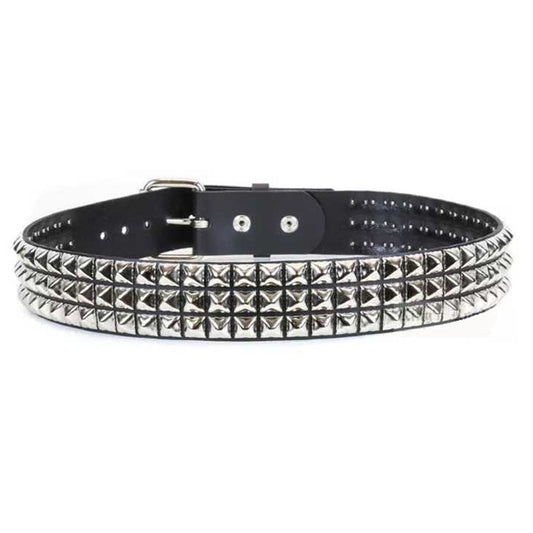
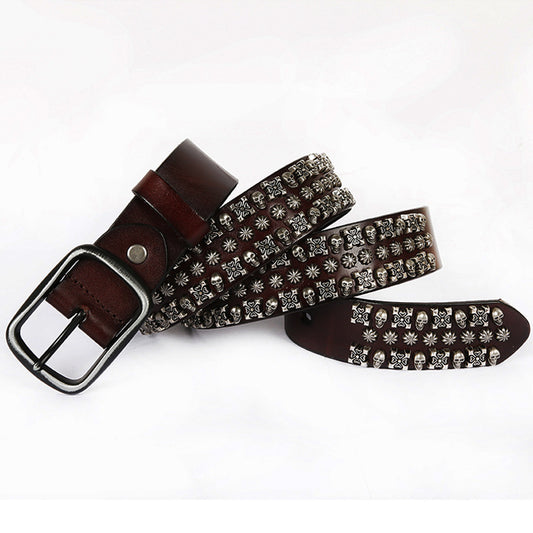
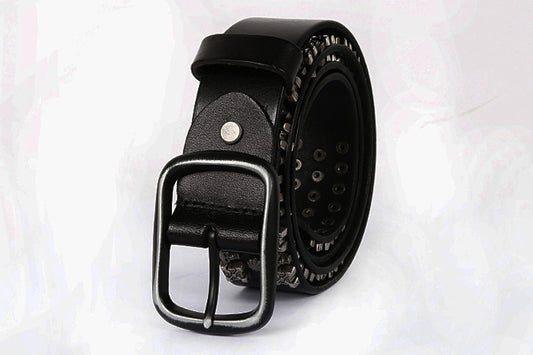
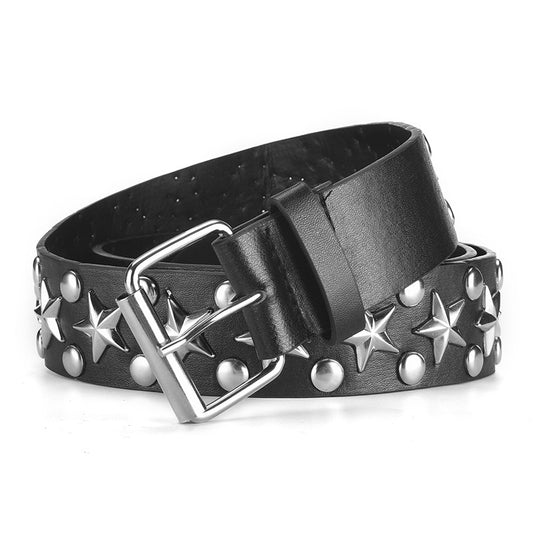
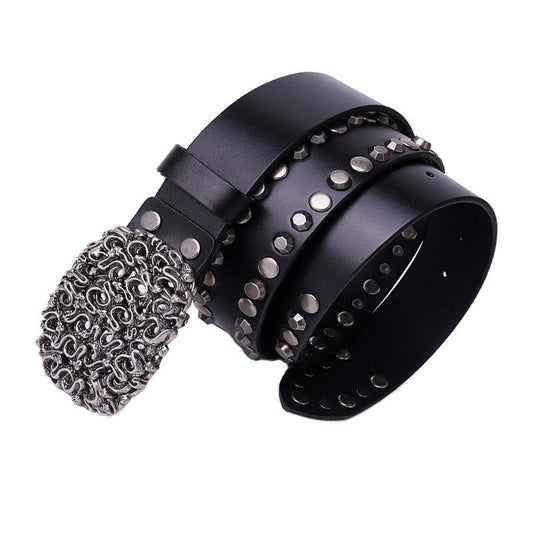
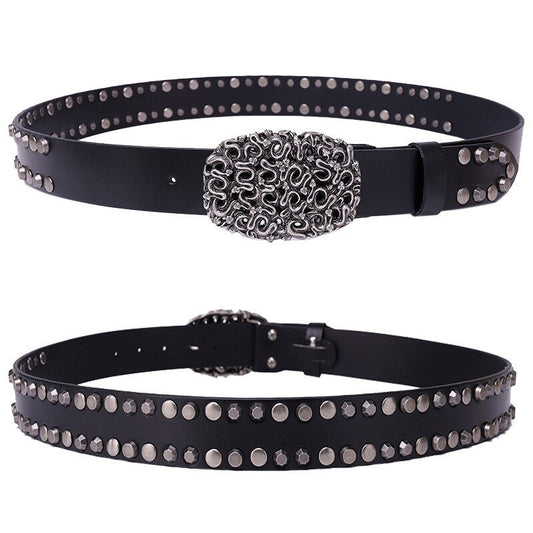
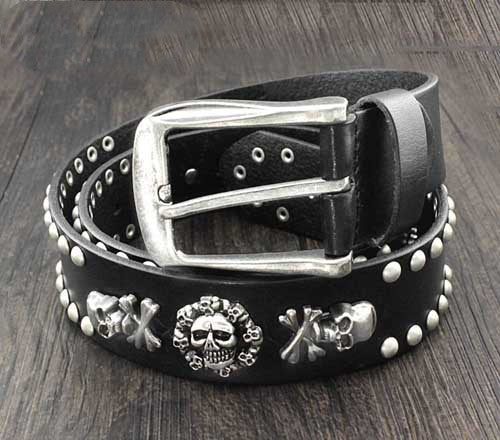
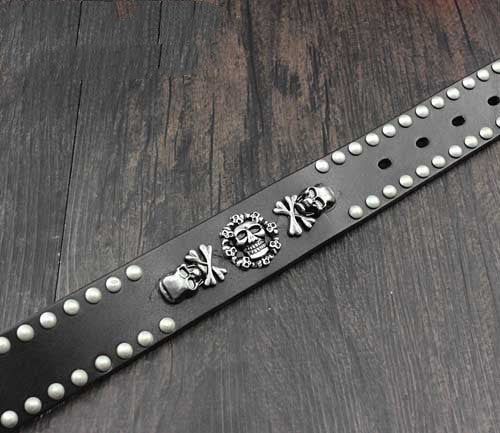
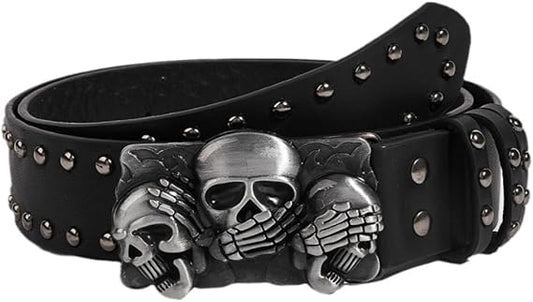
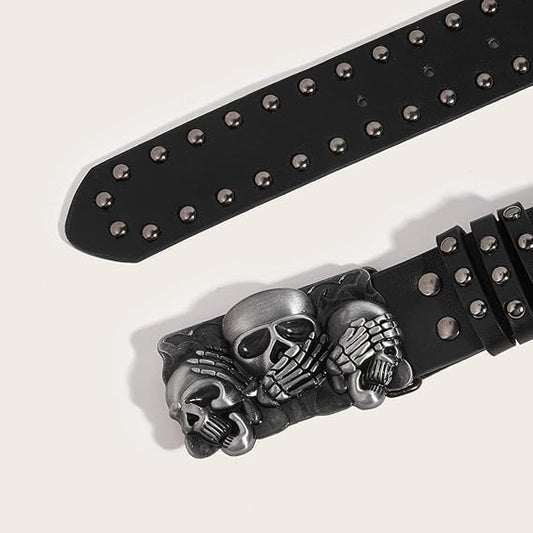
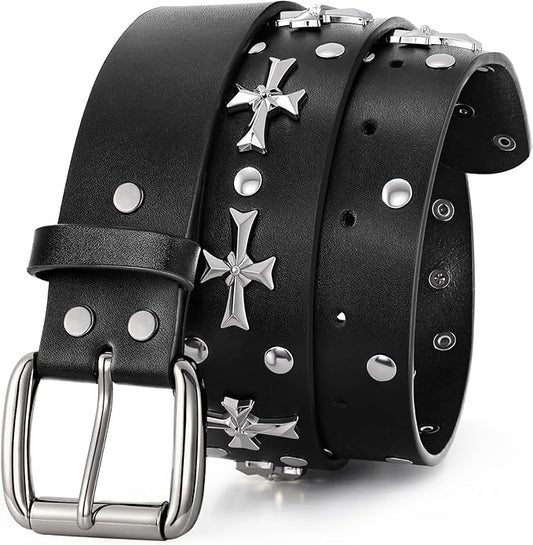
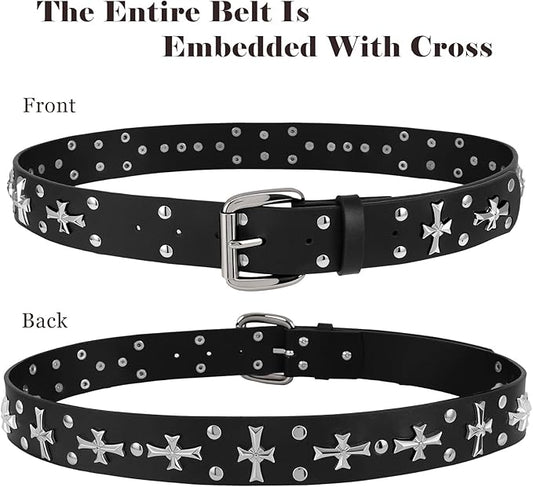
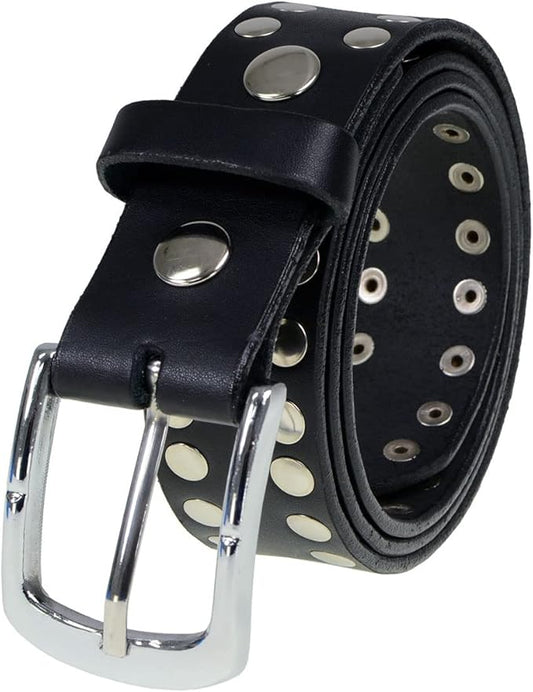
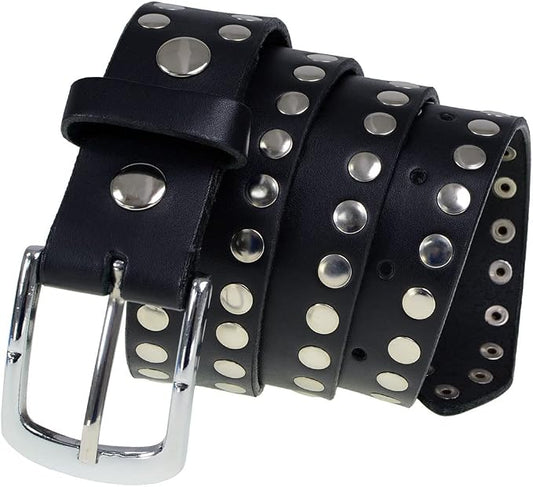
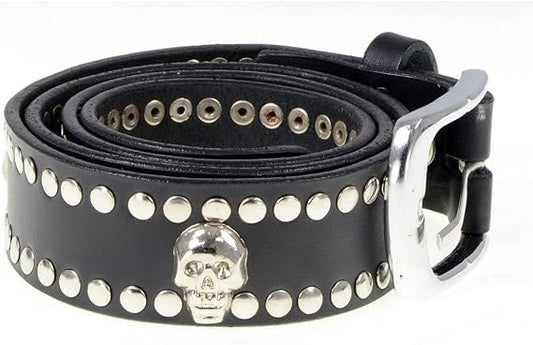
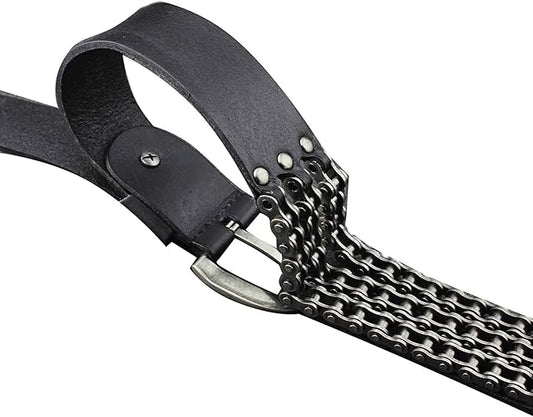
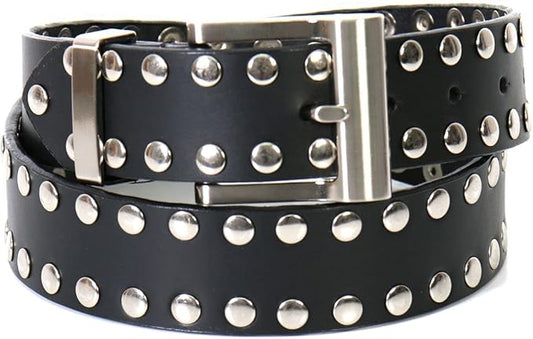
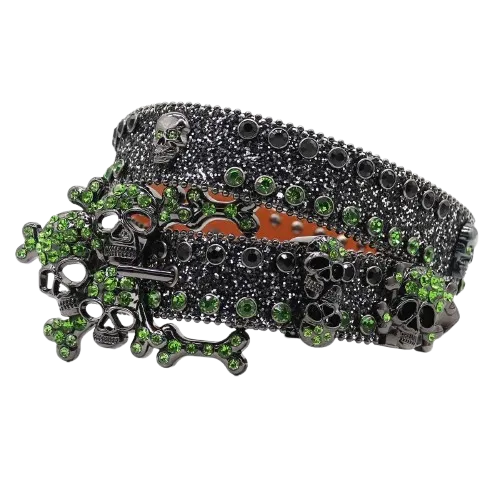
Biker Belts for Men - Leather Everyday Belts
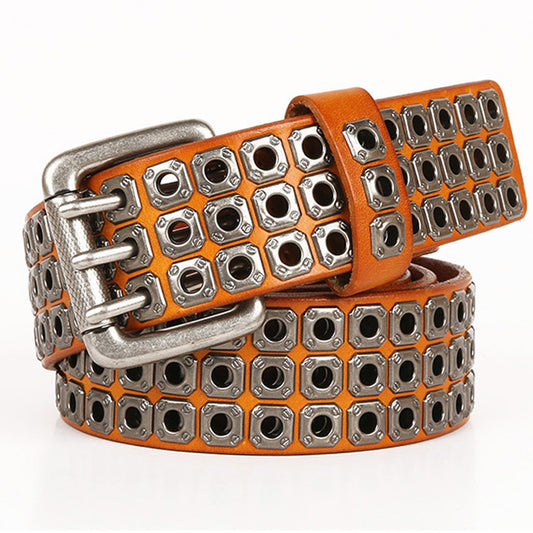
A cheap belt is an accessory. A rider's belt is equipment. That distinction sounds simple until you're four hours into a ride and a flat buckle edge is grinding into your hip, or that lightweight zinc clasp starts giving out against heat, sweat, and constant vibration.

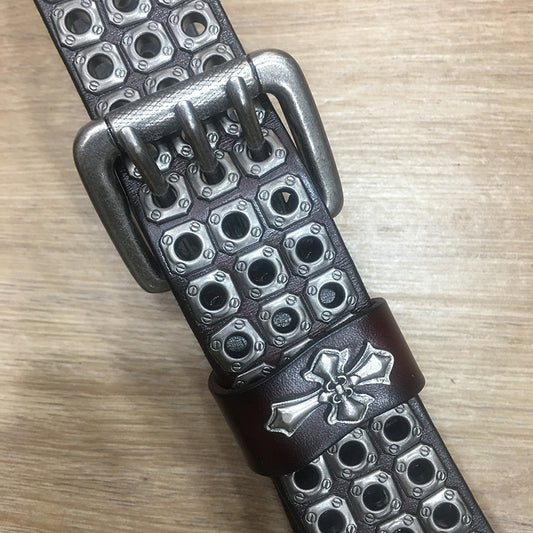
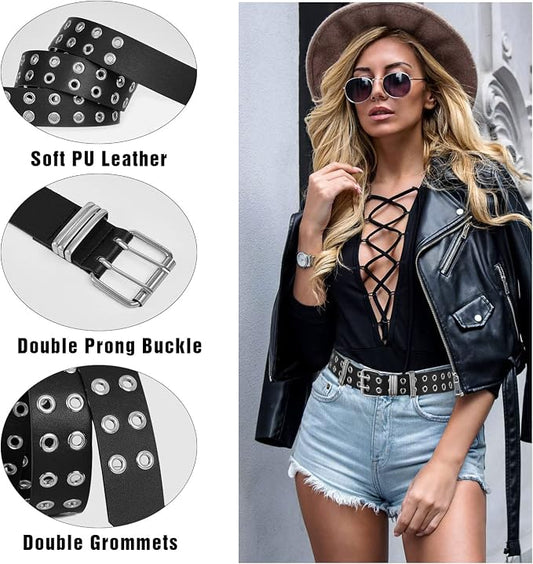
The belts here use full-grain leather. Not the sanded-down, surface-treated stuff - actual full-grain, pulled from the densest part of the hide. It stiffens in cold weather, and that's not a flaw - that's what real density feels like. It breaks in slowly, keeps its shape, and builds a patina that basically records every season you've worn it. Daily commutes, weekend runs, cross-country mileage - the leather handles it. It actually gets better with use.

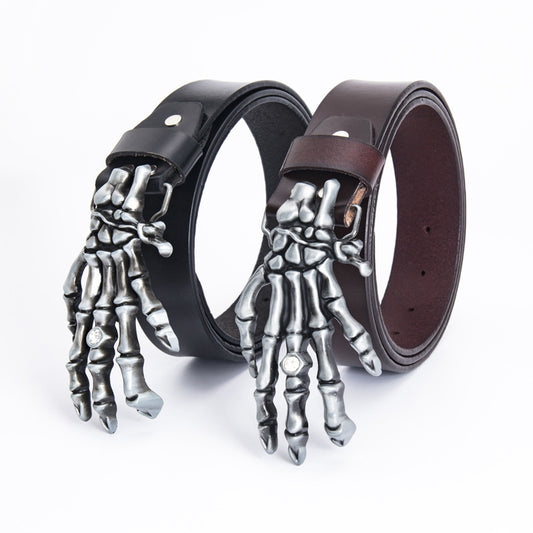
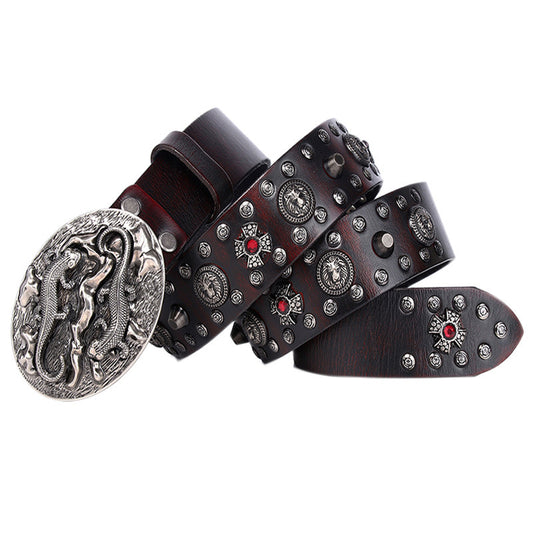
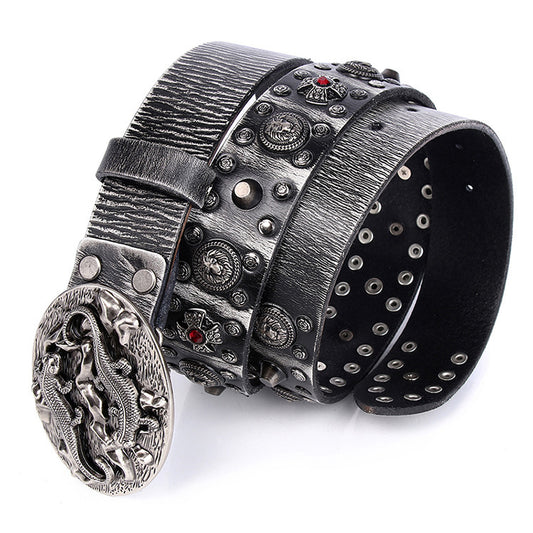
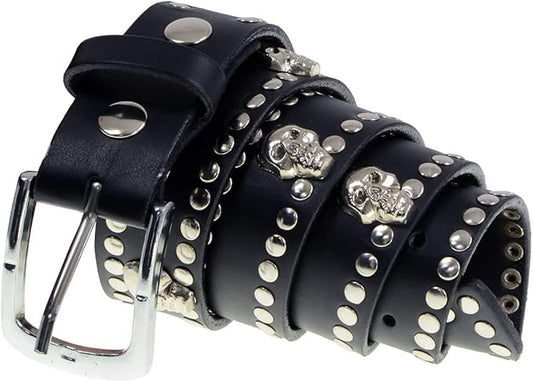
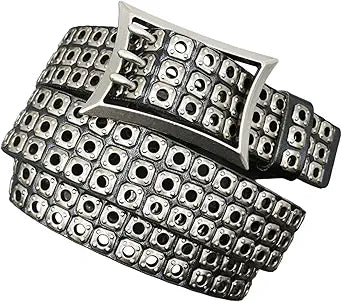
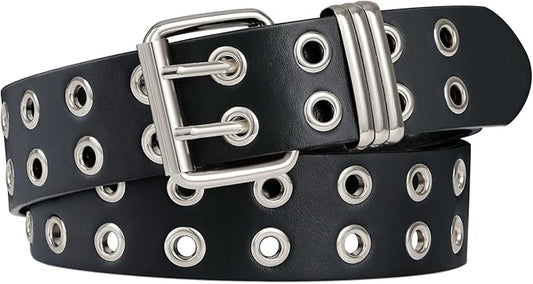
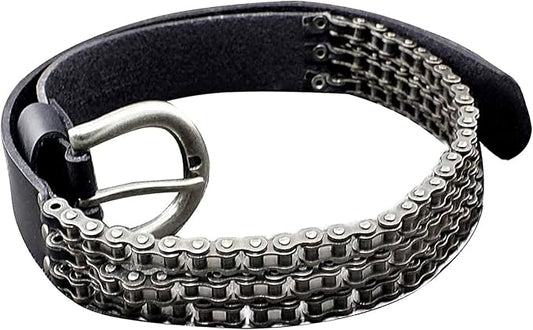
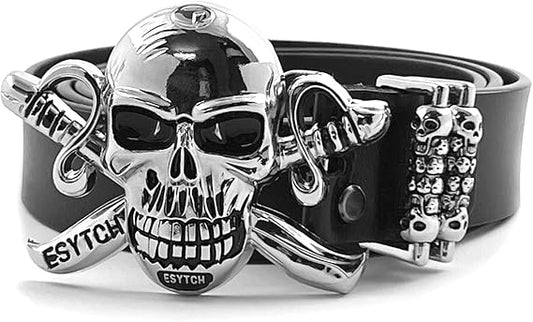
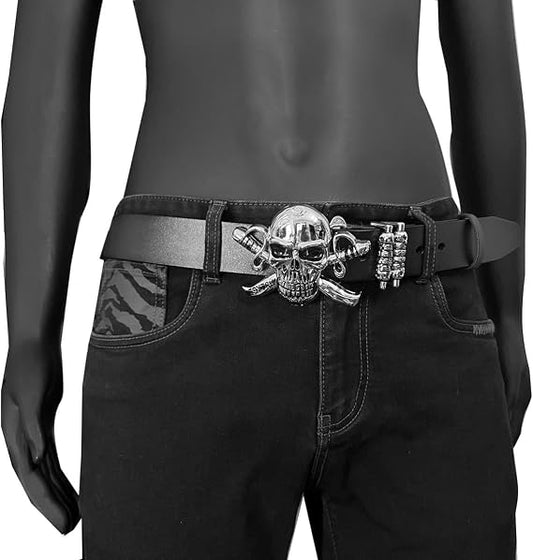
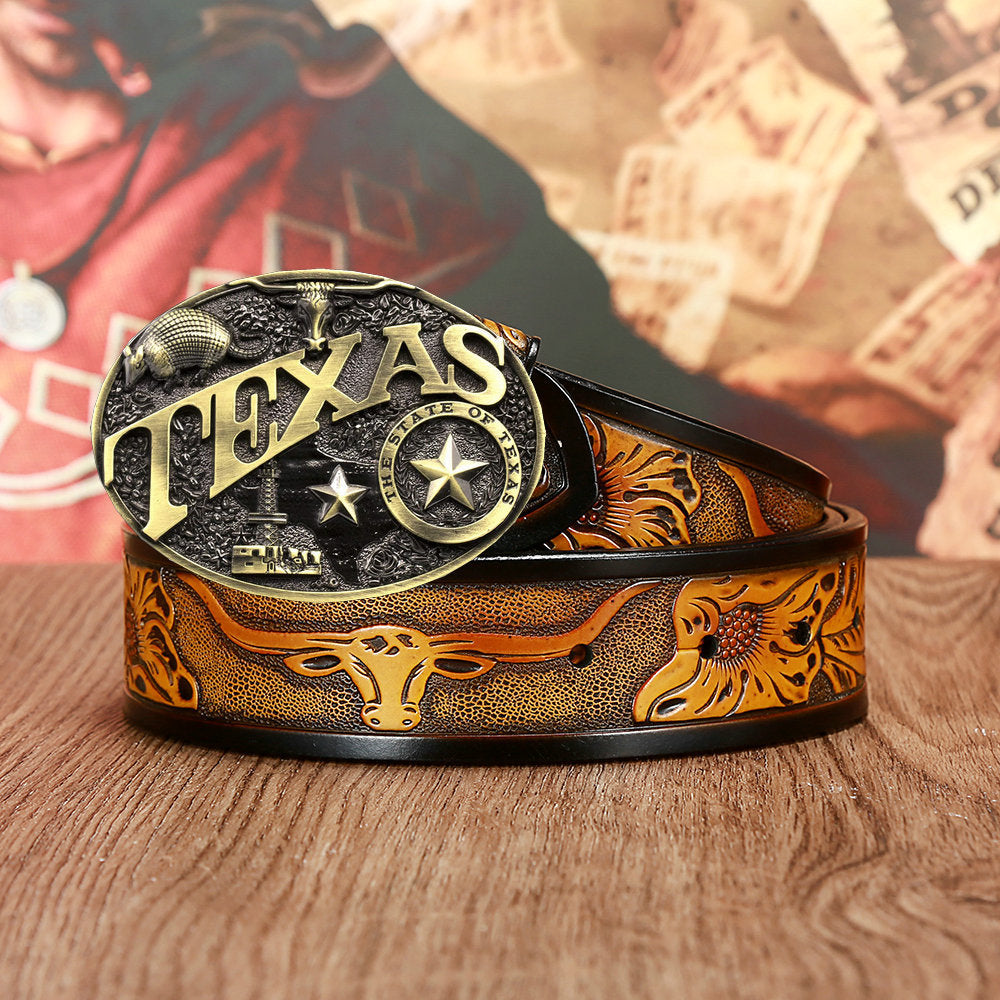
The buckles have real weight to them. Pick up a cast brass piece and it clunks when it hits a surface - it doesn't tink. That difference matters. Cheap zinc buckles feel light because they are, and they start showing it within a season. Brass, stainless, cast construction - that's what holds when weather turns bad and the miles keep stacking.

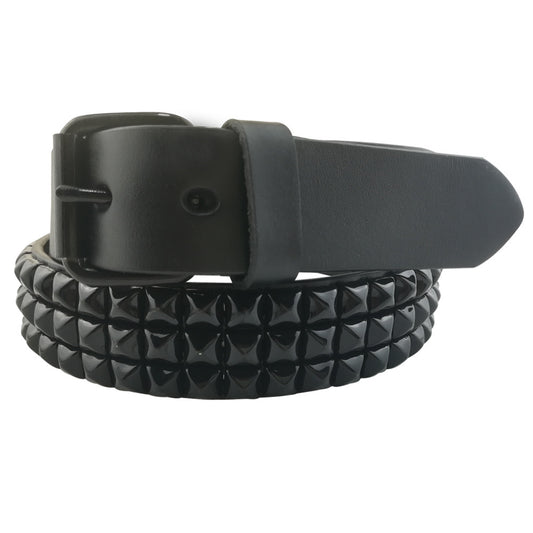
This collection runs from cruiser riders to chopper builds, touring setups to everyday riders who want gear that looks earned without the flimsy hardware. Women's motorcycle belts sit in here alongside the heavier men's options - same construction standards, designed to hold a clean silhouette under riding tension without the bulk or eventual snap of fashion belts that were never built for the road.

Once you've looked through the products, a few things are worth knowing before you decide.

Belt width is a real decision, not a detail.

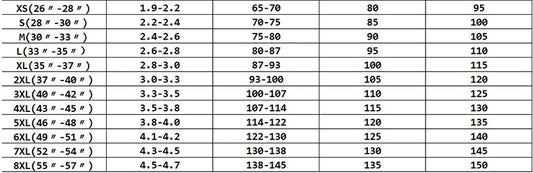
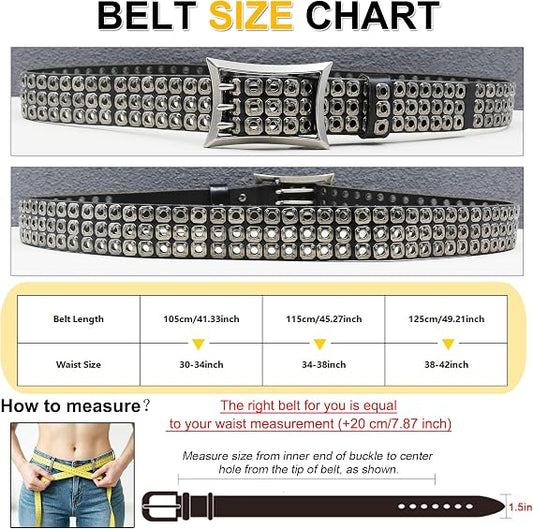
Short version: 1.5-inch belts fit standard denim loops - everyday jeans, most riding pants, anything cut for a regular waistband. If you're unsure, 1.5 inches is almost certainly right for the pants you already own. A 1.75-inch belt is wider, heavier, built for workwear or heavy-duty loops, and it spreads buckle weight better across long hauls - which actually matters when you're running a larger cast brass piece up front. Not sure if your jeans will take the wider strap? Hold a tape measure against the loop before ordering. A belt that doesn't thread clean is just a return waiting to happen.

Buckle material isn't only about looks.

Solid brass develops a natural patina - darkens with handling, picks up character from the road, looks more lived-in the longer you wear it. That's what cruiser and heritage riders are usually after. Stainless steel holds its finish, fights corrosion, and is the smarter pick if you're riding near salt air - coastal Florida, California coastline, anywhere humidity and sea air are just part of life. Chrome-plated zinc can look identical in photos but falls apart in a single wet season where stainless holds for years. Nickel-free buckles are available too, worth checking if metal sensitivities have been an issue with your gear before.

Cast versus stamped changes more than just price.

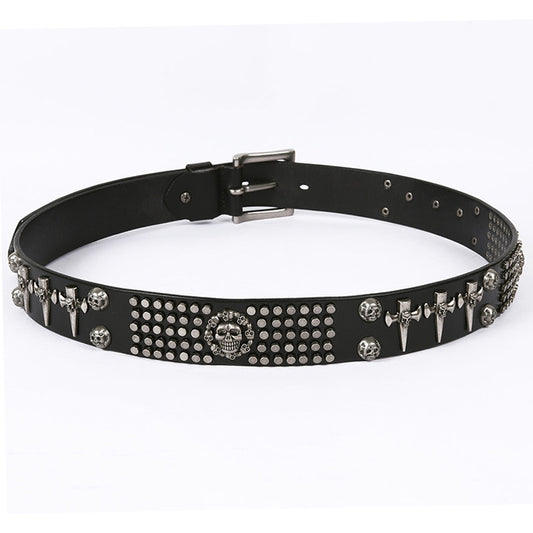
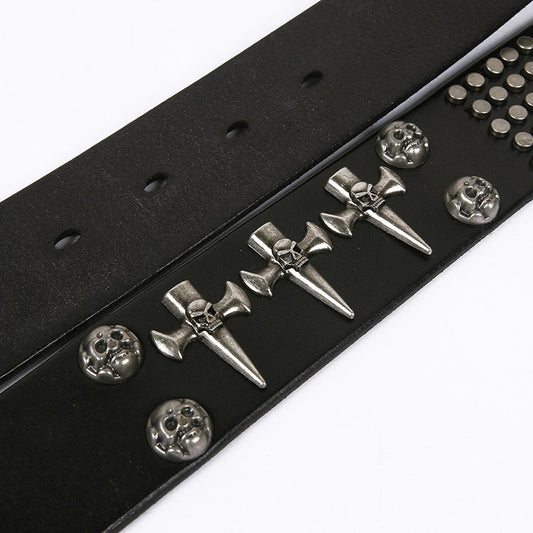
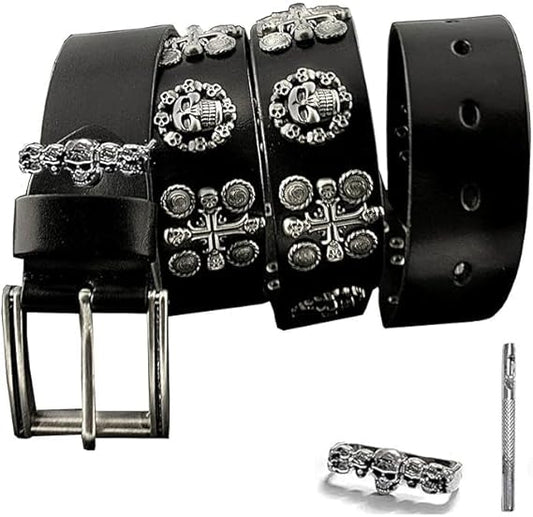
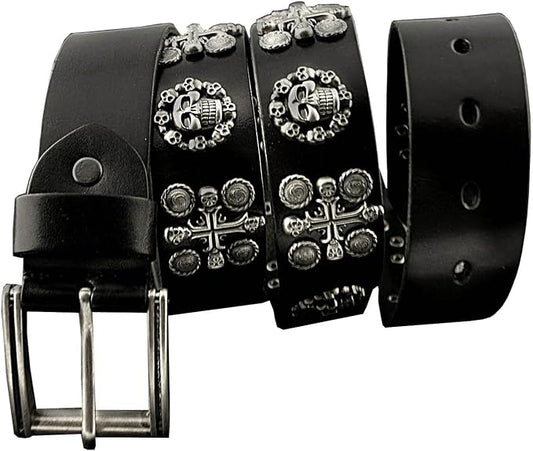
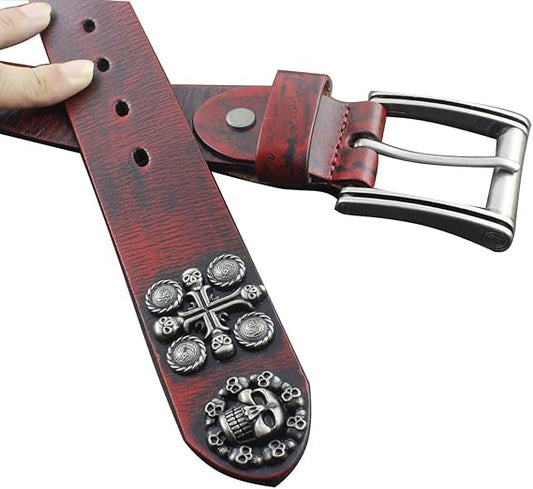
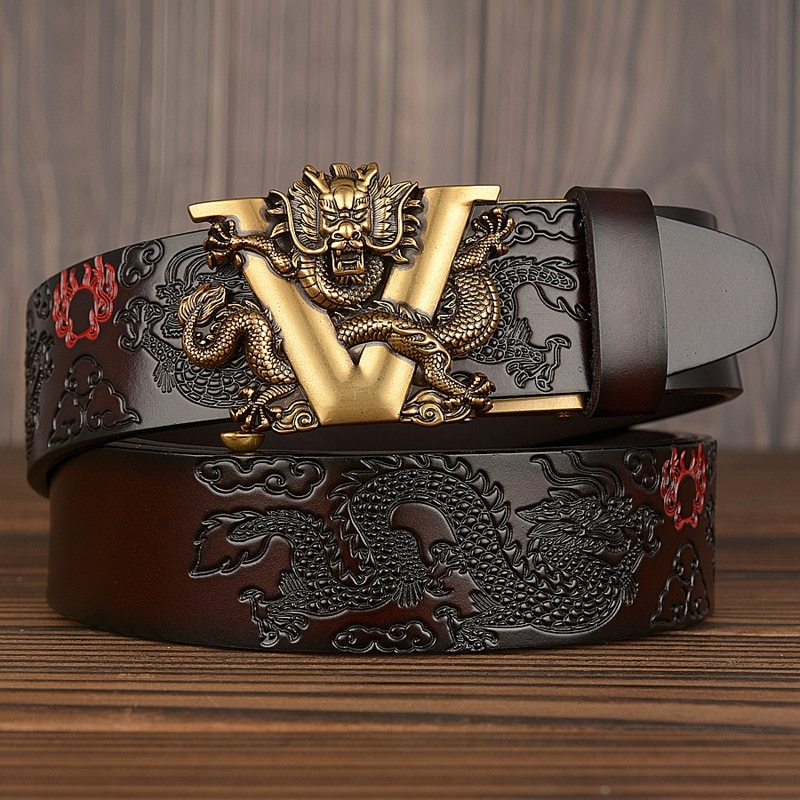
Cast buckles - the kind with skull relief, deep detail work, raised design - are poured into molds. That process gives you weight, precision, and a finish that doesn't flatten after years of wear. Stamped buckles come from sheet metal and suit cleaner, lower-profile designs. For a gothic skull belt buckle or anything meant to make a statement, cast is the only construction worth considering. For a western biker belt with a simple bar design, stamped is practical and keeps overall weight reasonable.

Attachment style comes down to how you actually use the belt.

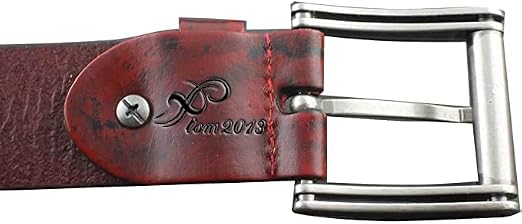
Snap-on systems are for the rider who wants flexibility - one thick leather biker belt, two or three buckles, swap from a road-ready skull to a clean stainless finish in under thirty seconds. It works well. Screw-post is more permanent, and that specifically matters for v-twin riders dealing with high-frequency engine vibration. Snap-on can loosen under sustained vibration on long hauls; screw-post won't budge. Clamp-style sits between the two - more secure than snap-on, no tools required.

The buckle back matters on long rides.

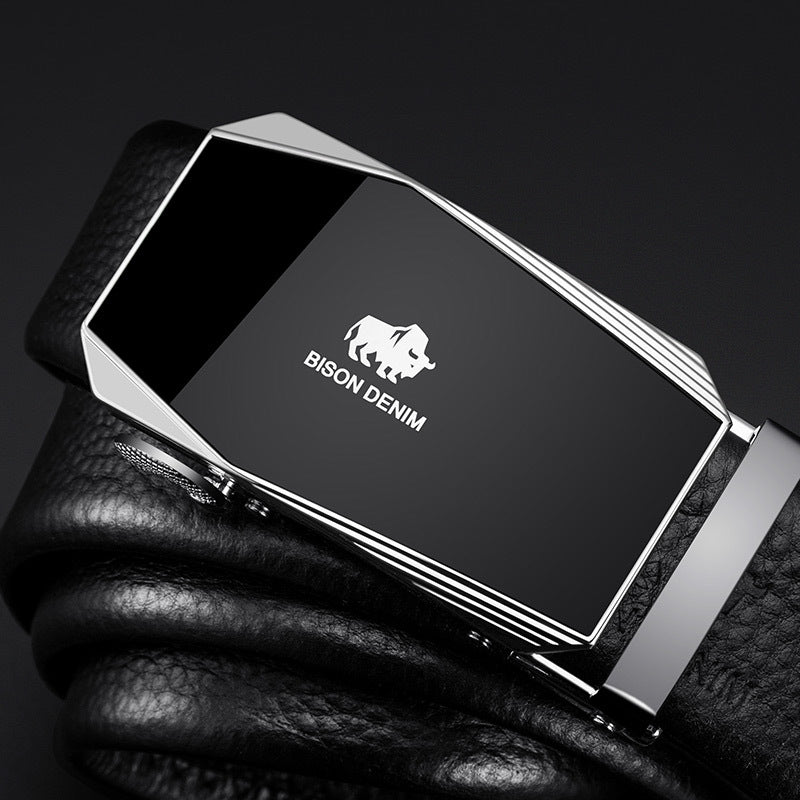
Most cheap buckles are flat on the back, meaning the edge sits hard against your hip when you're locked into a forward riding position. A contoured buckle back - shaped to follow your waist's natural curve - is the difference between forgetting the buckle is there and spending the last hour of a ride shifting around trying to get comfortable. Small thing until it's not.

Vegetable-tanned leather and a 1.5-inch leather strap without a buckle are available too, for riders who already have hardware they love and just need a quality strap to pair it with. Handmade biker gear tends to have slightly more variation in finish and texture - that's expected, and it's part of what separates it from mass-produced stuff.
What Riders Are Saying

★★★★★
Been running the brass skull buckle and a 1.75" belt for about eight months - two long trips and regular weekend rides in between. The leather already has that broken-in look and the buckle hasn't lost any finish. It's heavy, which is exactly what I wanted. Solid.
Marcus T. Austin, TX
★★★★★
I wanted something that didn't look like costume gear - just a clean classic belt that holds up to actual riding. The snap-on system was a bonus I wasn't expecting to use but now swap buckles pretty regularly. Fit was true to size and the leather quality is noticeably better than stuff I've bought elsewhere.
Donna R. Portland, OR
★★★★★
Florida heat and humidity have a way of wrecking gear fast, so I went with stainless steel. Months in and no corrosion, no dulling. The buckle sits better than my old one too - less digging on longer rides. That curved back actually does something.
Kevin B. Tampa, FL
★★★★★
Bought this as my everyday riding belt, not just for long trips. Fits my jeans perfectly at 1.5 inches and looks good on and off the bike. The weight of the buckle feels right - not too heavy for commuting, still looks like real gear. Happy with it.
Renata M. Chicago, IL
★★★★★
Switched to screw-post after a snap-on came loose on a mountain ride. Won't go back. The belt itself is legitimately good leather - not that layered or bonded stuff. Stiff at first, definitely loosened up after a few weeks but still holds its shape.
James O. Albuquerque, NM
★★★★★
Nashville, TN Bought this for my husband who's particular about his gear. He rides a cruiser and cares a lot about how things look and feel. He was actually impressed, which doesn't happen often. The chrome finish is clean, the leather is thick, and he mentioned it sits better on long rides than his last belt.
Sandra K.

Frequently Asked Questions

1.5 vs. 1.75 inch belt - which fits my jeans?
A 1.5-inch belt fits standard denim belt loops and most riding pants without any issue - right size for the majority of everyday jeans and works fine with most buckle sizes. A 1.75-inch belt is wider and built for heavier-duty loops: workwear, some touring pants, or jeans cut with wider loops. If you're not certain, measure the loop on your most-worn pair. A 1.5-inch strap is roughly a finger's width; if your loop has noticeable extra room, 1.75 will seat more cleanly. When in doubt, 1.5 is the safer starting point.
Can you swap buckles on a leather biker belt?
Yes, as long as the belt uses a snap-on tip or screw-post attachment rather than a riveted or sewn-in buckle. Snap-on lets you change buckles in seconds - fold back the leather tip, release the buckle, swap in a new one. Screw-post requires a small flathead but holds more permanently, which matters for v-twin or high-vibration bikes. If you're planning to run multiple buckles on one belt, look for belts listed with interchangeable buckle compatibility and make sure the buckle's inner width matches your belt width.
Do heavy cast brass buckles pull the belt down during riding?
A properly fitted belt with a quality keeper and correct length shouldn't shift much, even with a heavier buckle. The problem usually comes from having too much extra strap - that extra length creates movement. Buckle back shape plays into it too. A flat-backed buckle can shift and dig when you're leaned into a riding position; a contoured back follows the natural curve of your waist and stays put. If you're planning a large cast piece for long-distance riding, pay attention to the buckle's back profile and make sure your belt length is dialed in, not just approximate.
What's the difference between cast and stamped buckle construction?
Cast buckles are made by pouring molten metal into a mold - that gives you heavier weight, sharper relief detail, and a finish that holds up over years of wear. Anything with skull carving, raised patterns, or a thick dimensional look is almost certainly cast. Stamped buckles are pressed from flat sheet metal. Lighter, more consistent, better suited to cleaner or lower-profile designs. For a statement piece you're wearing every ride, cast holds up better long term. For everyday use or frequent swapping where weight is a factor, stamped is the practical call.
Is solid brass or stainless steel better for motorcycle belt buckles?
Both are solid, but they suit different riders and climates. Brass develops a natural patina over time - darkens, picks up character, which is exactly what heritage and cruiser riders want. It's got a heavier feel and pairs well with leather that's aging the same way. Stainless maintains its finish, resists corrosion more aggressively, and is the right call for coastal riders or anyone in high-humidity environments where salt air is a constant factor. Chrome-plated zinc can look similar in photos but degrades much faster in those conditions. Stainless holds where zinc fails.
Are there nickel-free buckle options?
Yes. Nickel sensitivity is more common than most people realize, and it's worth checking before buying - especially if you've had reactions to belt hardware before. Solid brass and certain stainless steel buckles are naturally nickel-free or available in nickel-free finishes. Check the product listing for material specifics, and if it's not listed clearly, just ask before ordering. It's a practical concern that doesn't get mentioned enough in most belt collections.
Can I buy just the leather strap without a buckle?
Yes. A leather belt strap with no buckle is a solid option for riders who already have hardware they want to keep - a vintage piece, a custom buckle, something that came off an old belt. The strap is sized to work with standard snap-on or screw-post systems. Just make sure the strap width matches the buckle's inner bar measurement before you order.
What makes a belt casual rather than formal?
Screw-post. Snap-on systems work well for most riding, but sustained high-frequency vibration - common on v-twin engines - can gradually work a snap-on loose over a long haul. Screw-post locks the buckle in place mechanically and won't shift regardless of vibration level. If you're on a cruiser or chopper with a v-twin and you're doing serious distance, screw-post is the more reliable option. Snap-on is fine for commuting or moderate weekend riding where vibration isn't constant.