Casual & Everyday Leather Belts for Men
- Sale price
- $39.99 USD
- Regular price
-
$64.99 USD - Regular price
- $39.99 USD
- Unit price
- per
- Sale price
- $29.99 USD
- Regular price
-
$49.99 USD - Regular price
- $29.99 USD
- Unit price
- per
- Sale price
- $39.99 USD
- Regular price
-
$64.99 USD - Regular price
- $39.99 USD
- Unit price
- per
- Sale price
- $39.99 USD
- Regular price
-
$64.99 USD - Regular price
- $39.99 USD
- Unit price
- per
- Sale price
- $39.99 USD
- Regular price
-
$64.99 USD - Regular price
- $39.99 USD
- Unit price
- per
- Sale price
- $59.99 USD
- Regular price
-
$139.99 USD - Regular price
- $59.99 USD
- Unit price
- per
- Sale price
- $29.99 USD
- Regular price
-
$49.99 USD - Regular price
- $29.99 USD
- Unit price
- per
- Sale price
- $29.99 USD
- Regular price
-
$49.99 USD - Regular price
- $29.99 USD
- Unit price
- per
- Sale price
- $39.99 USD
- Regular price
-
$64.99 USD - Regular price
- $39.99 USD
- Unit price
- per
- Sale price
- $29.99 USD
- Regular price
-
$49.99 USD - Regular price
- $29.99 USD
- Unit price
- per
- Sale price
- $29.99 USD
- Regular price
-
$49.99 USD - Regular price
- $29.99 USD
- Unit price
- per
- Sale price
- $29.99 USD
- Regular price
-
$49.99 USD - Regular price
- $29.99 USD
- Unit price
- per
- Sale price
- $29.99 USD
- Regular price
-
$49.99 USD - Regular price
- $29.99 USD
- Unit price
- per
- Sale price
- $29.99 USD
- Regular price
-
$49.99 USD - Regular price
- $29.99 USD
- Unit price
- per
- Sale price
- $39.99 USD
- Regular price
-
$64.99 USD - Regular price
- $39.99 USD
- Unit price
- per
- Sale price
- $29.99 USD
- Regular price
-
$49.99 USD - Regular price
- $29.99 USD
- Unit price
- per
- Sale price
- $89.99 USD
- Regular price
-
$49.99 USD - Regular price
- $89.99 USD
- Unit price
- per
- Sale price
- $39.99 USD
- Regular price
-
$64.99 USD - Regular price
- $39.99 USD
- Unit price
- per
- Sale price
- $39.99 USD
- Regular price
-
$64.99 USD - Regular price
- $39.99 USD
- Unit price
- per
- Sale price
- $29.99 USD
- Regular price
-
$49.99 USD - Regular price
- $29.99 USD
- Unit price
- per
Once you've looked through the options, a few things are worth understanding before you decide.
Width and loop fit
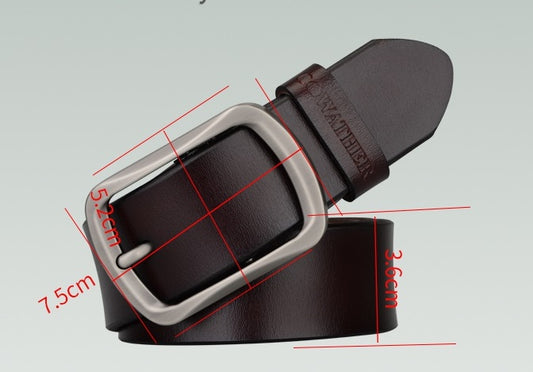
The 1.5-inch width is what most jeans are built around. It fills the loop the way it's supposed to - not so loose it shifts, not so wide it forces through. For heavier denim specifically, 1.5 inches holds better and looks proportional. If you're wearing slimmer chinos or lighter-weight trousers, a 1.25-inch belt tends to give a cleaner, less rugged result. The difference is subtle but you notice it when the fit is right.
The truth about leather
Not all leather is equal, and the labeling doesn't always make that obvious. Full-grain leather is the outermost layer of the hide - untouched, unsanded, keeping the natural surface intact. It's the densest part of the hide, which means it resists moisture and daily wear better than anything beneath it. It also develops a patina with use, meaning the belt looks richer over time rather than just worn out. Top-grain leather has had the surface buffed for a more consistent, refined appearance. Still real, still durable - just processed for evenness rather than raw character.
Then there's genuine leather. Technically real, but made from compressed lower layers of the hide. Think of it as the particle board of the leather world - holds together initially but shows its limits fast. Peeling, cracking, early breakdown - those are genuine leather problems, not leather problems. If you want a jeans belt for men or women that holds up over years of daily use, full-grain is the honest choice.
Stiffness is a good sign
A full-grain leather belt often feels firm when new. That's not a flaw - it's the material behaving correctly. A belt that's soft and pliable on day one is usually a belt that's broken by month six. After a couple of weeks of regular wear, full-grain leather flexes to your natural movement and settles into shape. The break-in period is short. The payoff lasts years.
Buckle type for daily wear
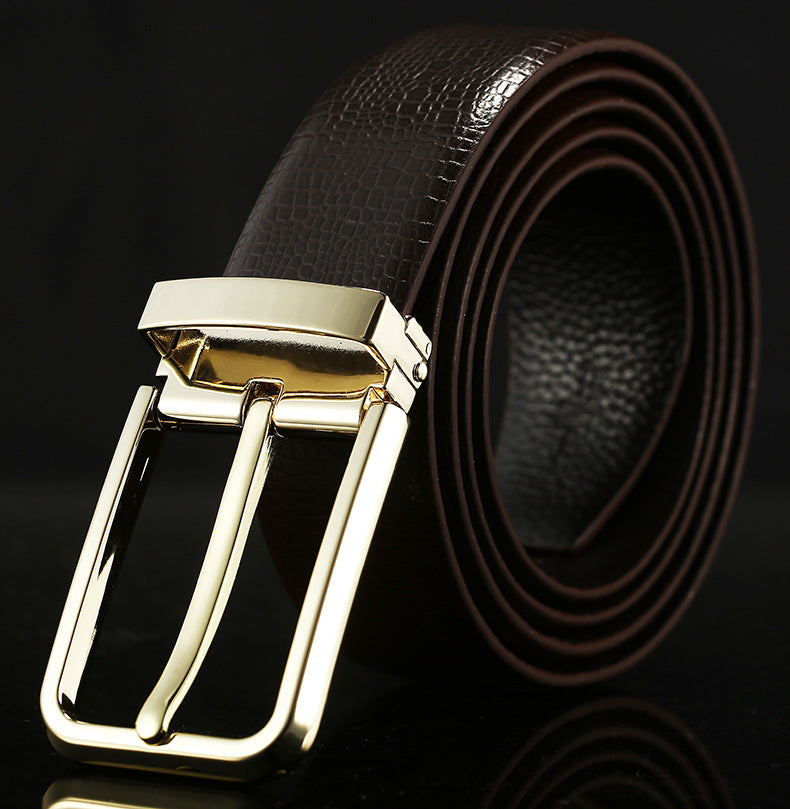
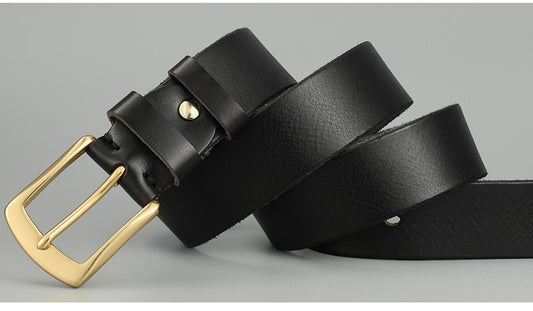
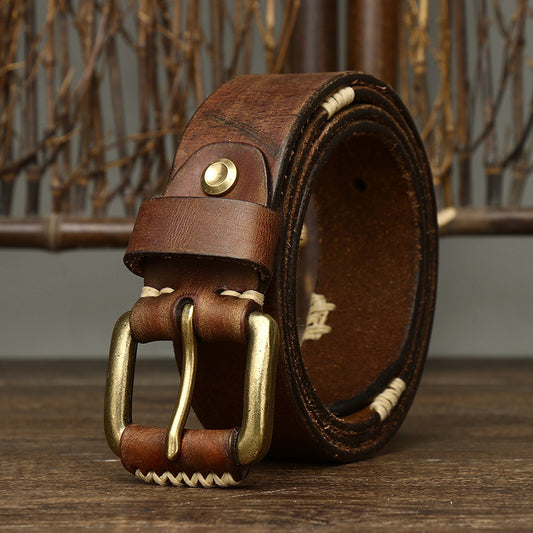
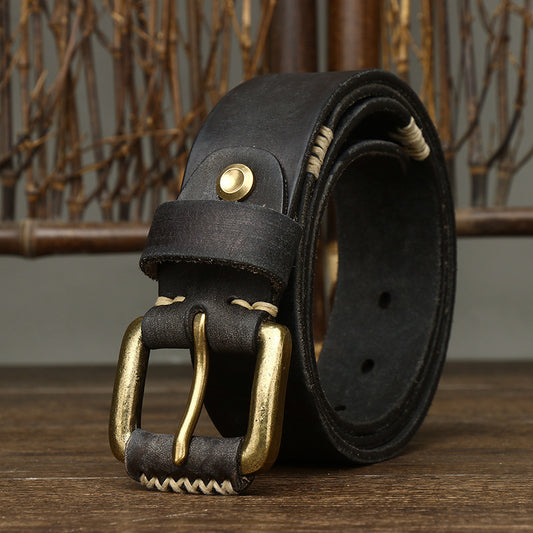
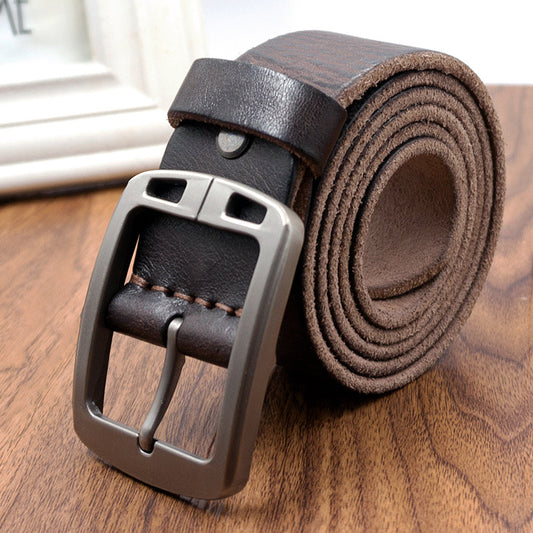
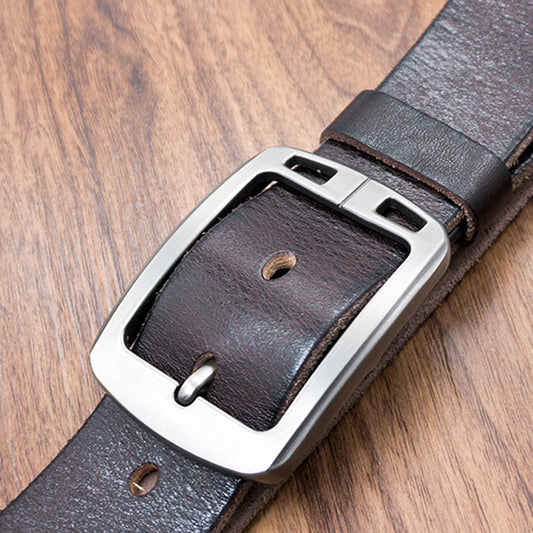
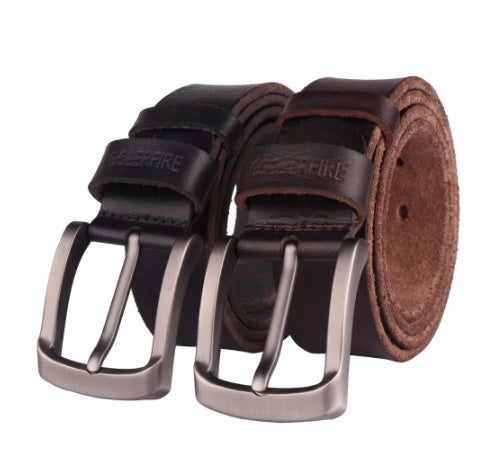
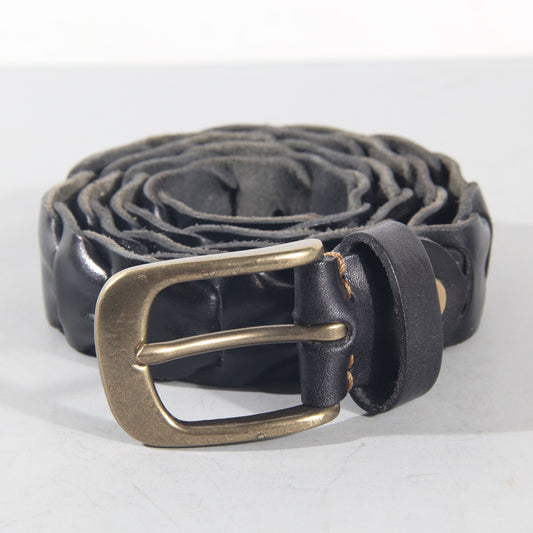
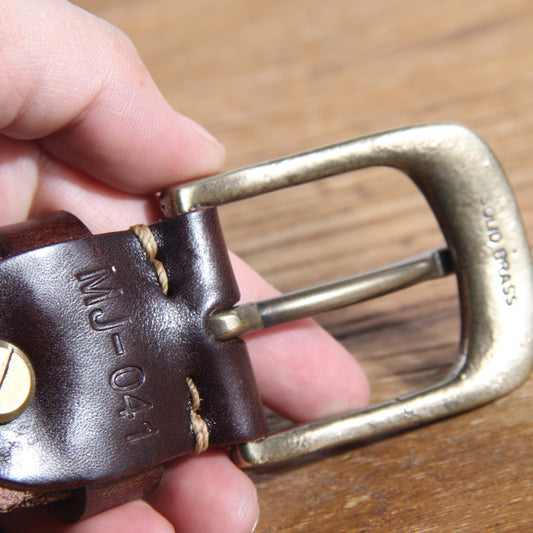
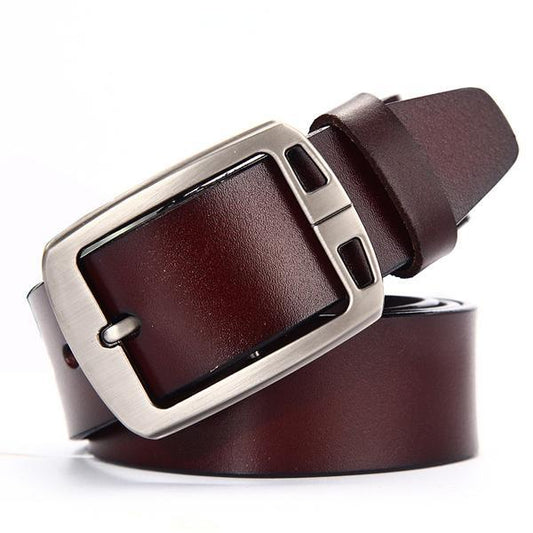
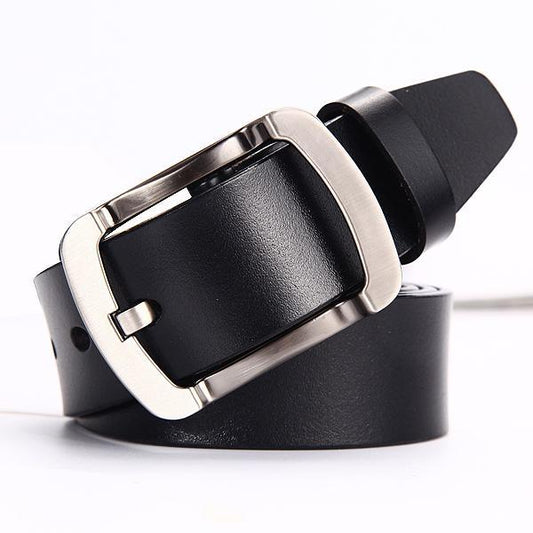
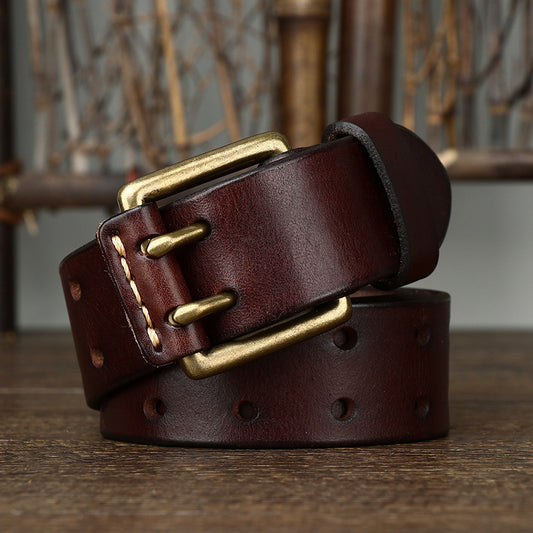
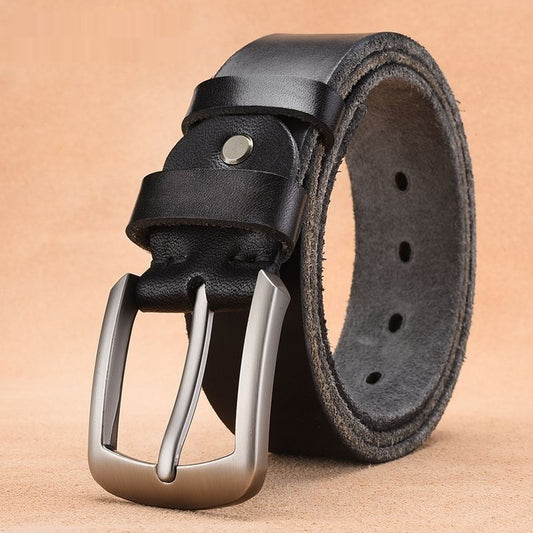
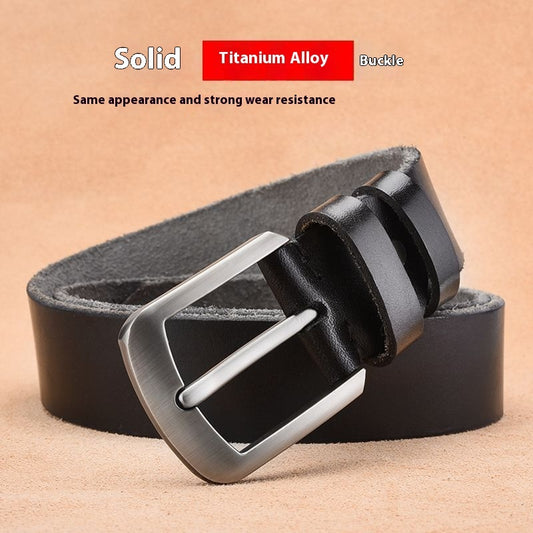
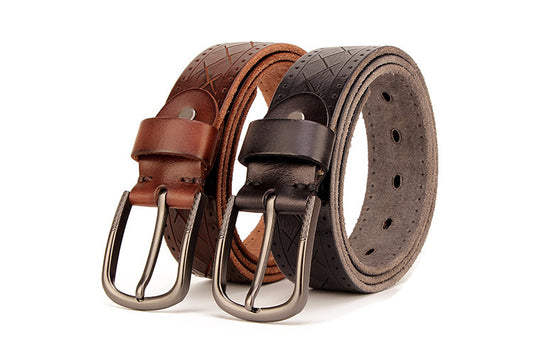
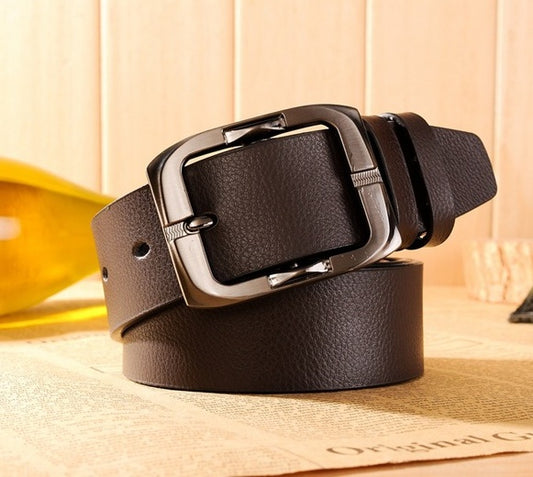
A single-prong pin buckle is the standard for a reason. It lies flat, fastens without effort, and doesn't draw attention - which is exactly what you want from casual wear. Roller buckles thread a little more smoothly for people who prefer that feel. Neither is better; it's personal preference. What matters more is hardware quality. A solid brushed or antique-finish buckle has a weight and feel that cheap die-cast metal simply doesn't, and it won't snap, warp, or catch on the loop after a few months.
Color and pairing
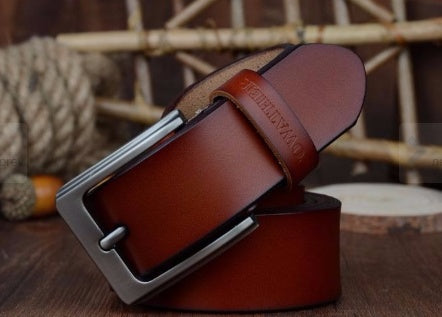
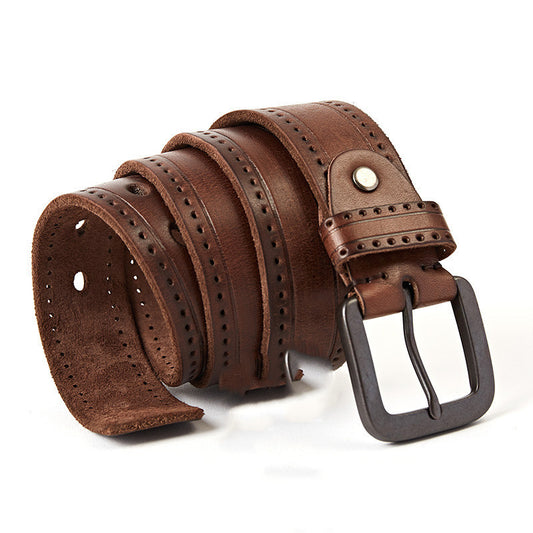
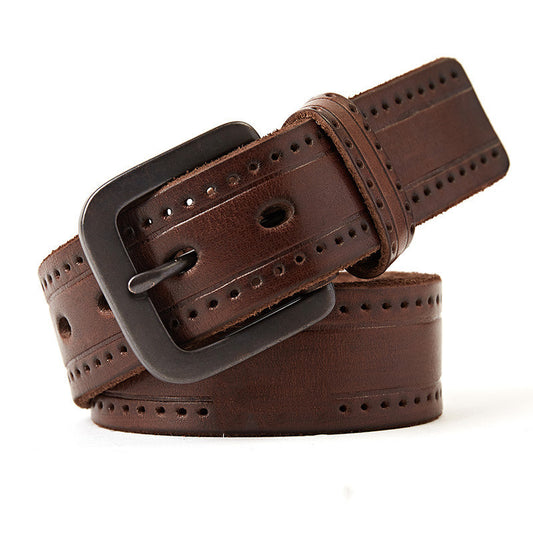
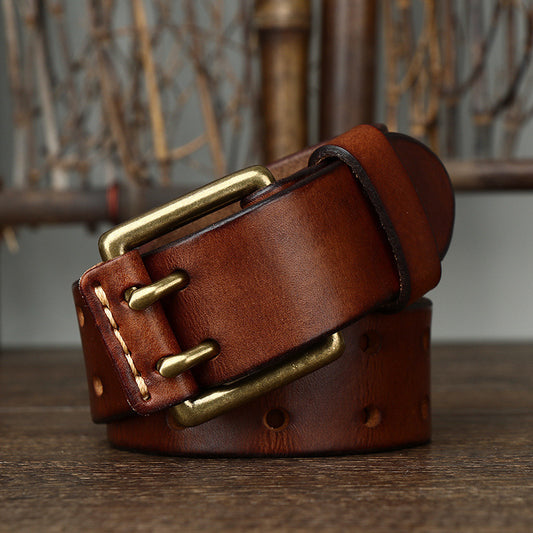
Brown is the most forgiving leather color across casual outfits. Medium tan through dark brown works with most denim washes, navy, olive, and khaki without competing. Black works well with darker jeans and more urban dressing. For navy chinos specifically, a cognac or medium brown reads more natural than black, which can feel heavy depending on the rest of the outfit. When in doubt, brown over black for casual daytime wear - it's more flexible than most people expect.
A durable everyday belt for men doesn't need to cost a lot, but it needs to be made of something honest. The belts here are built on that standard - real leather grades, proper hardware weight, and widths that fit the way they should.